 Quick visit
Gearing's Point
In the town centre
- View
- Over the Old Harbour
- Walk
- Very short
- Nearby
- Cafés and museum
Language
EnglishCurrency
US dollar · $GetYourGuide converts to the currency you select here.
Guide · From the shore
You do not need a boat to see whales in Hermanus. Here are the lookouts along the cliffs, how to reach each one and how to make a whole day of watching from the shore.
Editorial team, whale-watching-hermanus.comUpdated October 5, 2026about 6 min to read12 sources
Quick answer
Whale watching from the Hermanus Cliff Path is free, flexible and often astonishingly close. The path follows the rocky coast for about 12 km, from the New Harbour all the way to Grotto Beach.1 Along the way, benches, steps and small headlands look straight down into the water where southern right whales rest and play in season.
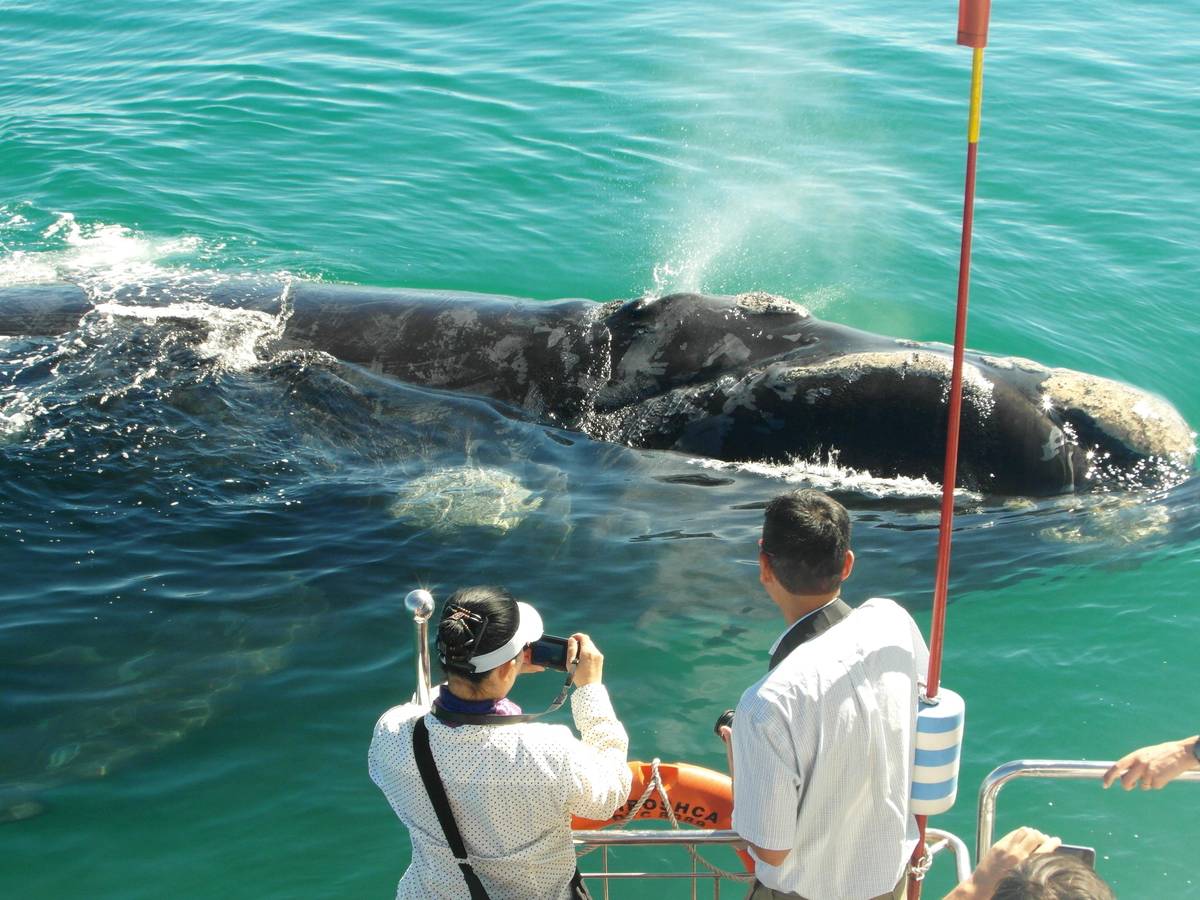
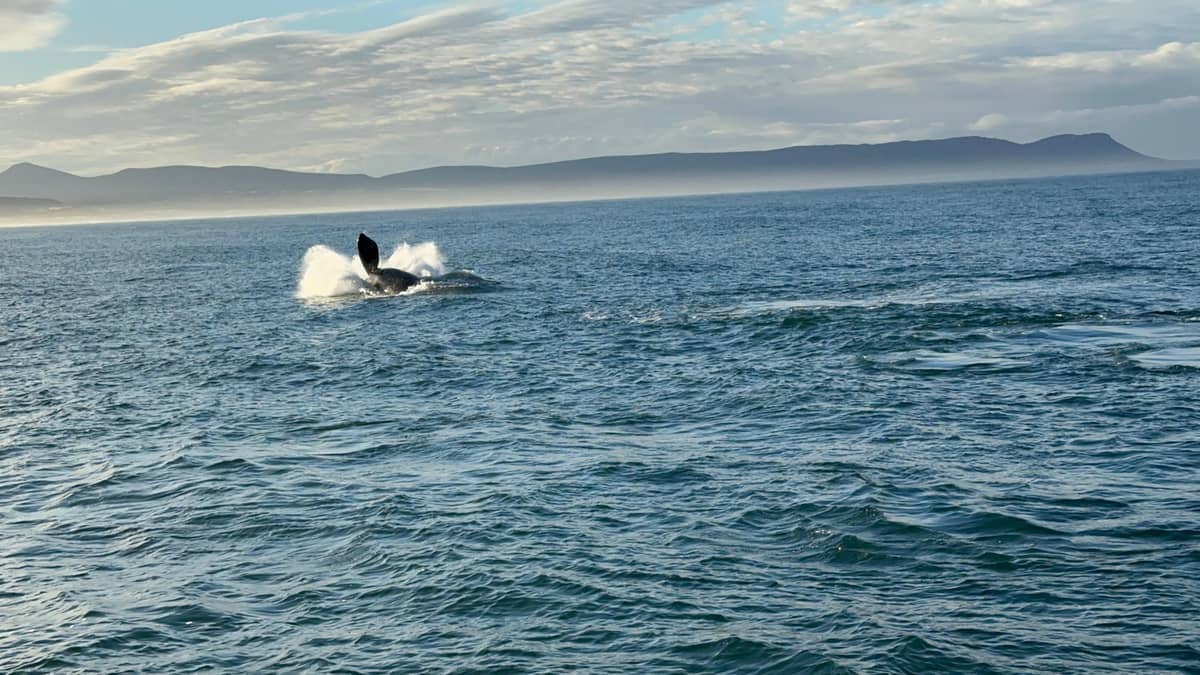
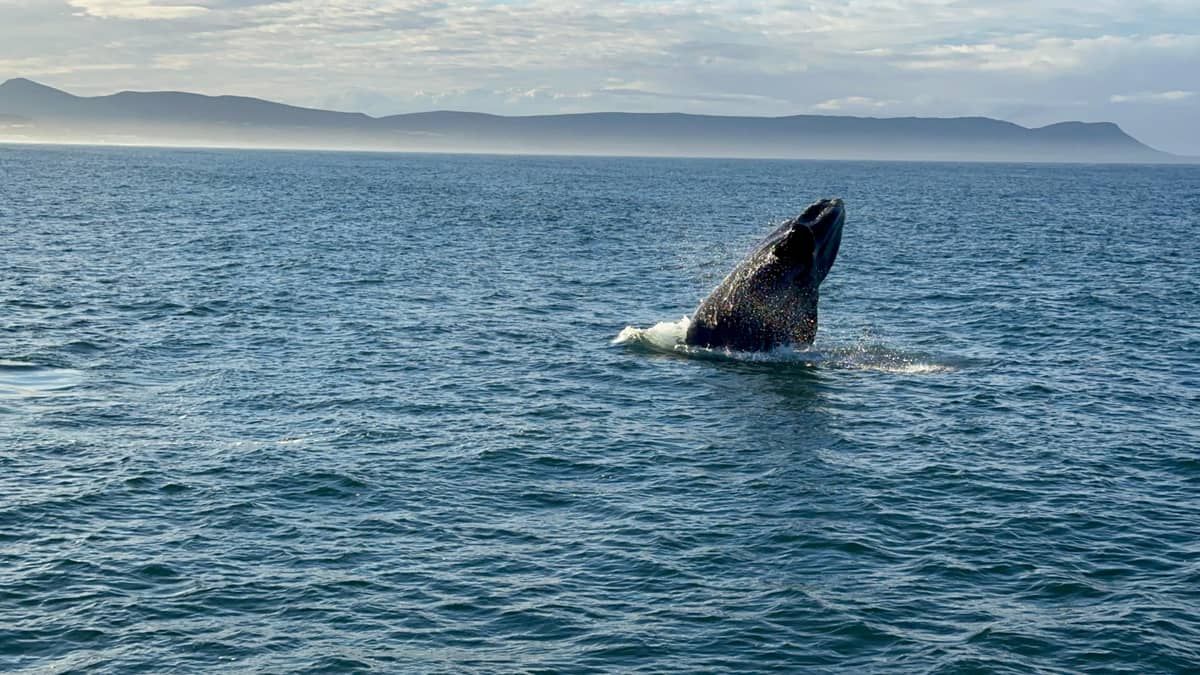
The shape of Walker Bay does the work. The water off the cliffs is sheltered and fairly shallow in places, which suits mothers with calves, and the low cliffs lift you just high enough to see a whale's outline below the surface. Hermanus.co.za says that at certain points whales can be seen playing as close as five meters from shore.2
That closeness is what surprises first-time visitors. You can stand with a coffee on a sunny morning and hear a whale breathe before you see it. You can follow a calf's clumsy breaches without any engine noise, and you can come back the next day and watch the same stretch of water again. Few places in the world make whales this easy to meet from land.
The walk
Start
The western end of the path, where the boats leave.1
Near Fick's Pool
A popular lookout on the way to the New Harbour.6
Town centre
An open view over the Old Harbour.3
Next door
Terraces over Walker Bay with whale boards.7
East
Favourite lookouts, one reachable by car.4
End
The path ends here after about 12 km.1
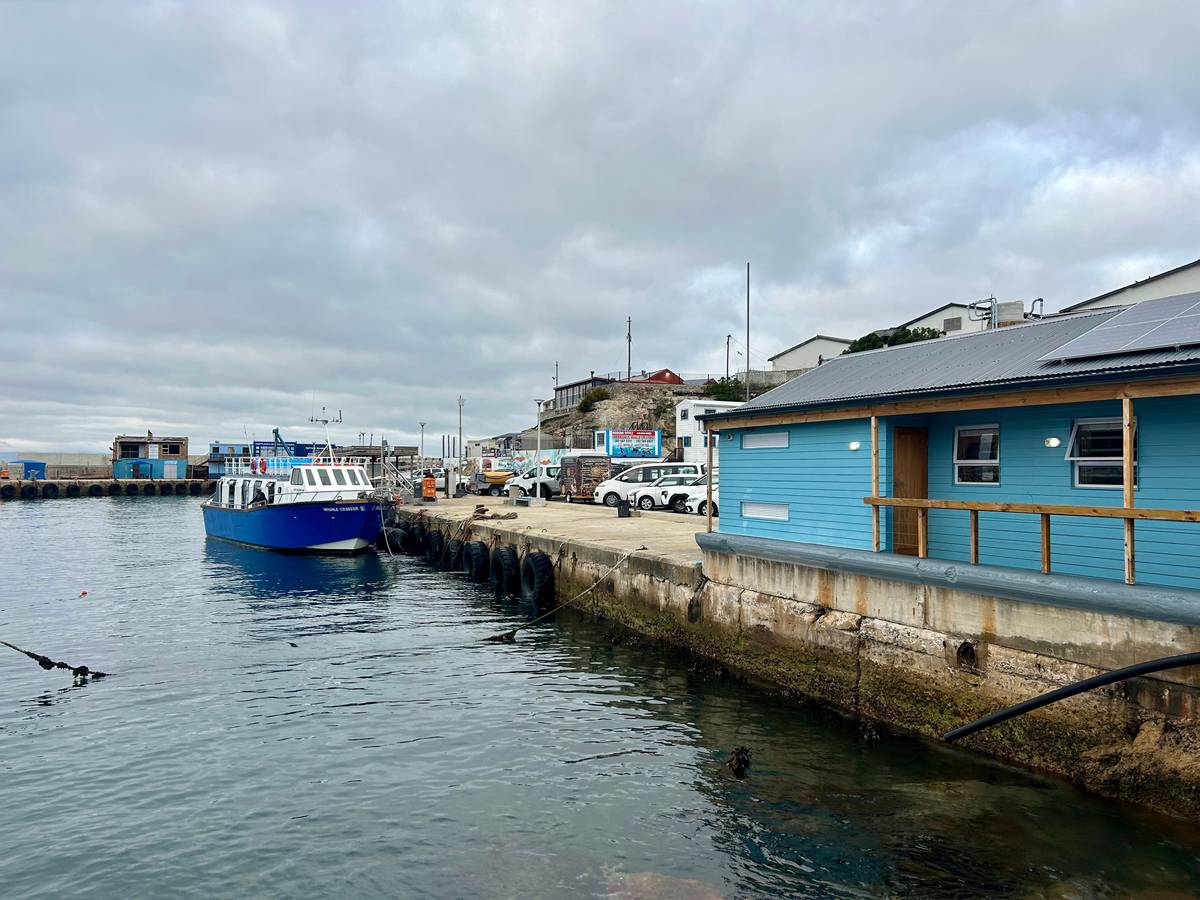
The path starts at the New Harbour in the west, where the whale watching boats leave.8 Walking east, you soon reach Dreunkrans, a popular lookout about 100 metres along the path from Fick's Pool towards the New Harbour.6 It is a good first stop, with the rock pools below and the open bay ahead.
Closer to the town centre you come to Gearing's Point. It overlooks the Old Harbour and gives an uninterrupted view of the ocean.3 Next to it, the Old Harbour has viewing terraces over Walker Bay and information boards about the whales.7 This is the busiest stretch in season, with the harbour museum, cafés and the market a few steps away.
Further east, Sievers Point is one of the most popular whale watching spots in town and the closest to where the whales play, while the Kwaaiwater lookout can be reached by car.4 The path ends at Grotto Beach, and the rocks above the sea at Voëlklip and Grotto are good for whale spotting too.9 Each lookout has its own character, so it pays to try more than one.
Lookouts
| Lookout | What you get | Access | Best for |
|---|---|---|---|
| Dreunkrans | A popular lookout near Fick's Pool | On foot | A quiet first stop |
| Gearing's Point | Open view over the Old Harbour | Town centre | A short visit |
| Old Harbour | Viewing terraces and whale boards | Town centre | Families |
| Sievers Point | Closest to where whales play | On foot | Close sightings |
| Kwaaiwater | A lookout above the bay | By car | Limited mobility |
| Voëlklip and Grotto | Rocks above the sea | End of the path | A long walk |
Lookouts and their features as described by Hermanus.co.za.63749
Pick a lookout
Quick visitIn the town centre
 Close whales
East of the centre
 By car
Further east
Decision helper
Tap what you are looking for
It gives an uninterrupted view over the Old Harbour.3
Hermanus.co.za calls it the closest to where the whales play.4
This lookout is accessible by vehicle.4
Its terraces carry information boards about the whales.7
About 12 km from the New Harbour to Grotto Beach.1
The Cliff Path offers 12km of the best whale watching view points in the world, stretching from one end of Hermanus to the other. At certain points whales can be seen playing as close as five meters from shore.
Choosing a whale watching viewpoint in Hermanus comes down to time, mobility and crowds. If you only have an hour, Gearing's Point and the Old Harbour terraces give you the most for the least effort, with parking and the town close by. If you can walk, the quieter stretches further east often have fewer people and just as many whales.
Look for height and a clear view along the coast rather than straight out to sea. Whales often move parallel to the shore, so a lookout that lets you see a long stretch of water gives you more chances to spot a blow. A small rise, a bench on a headland or the rocks at the end of a path are often better than the busiest platform.
Stay a while once you have found a good place. Whales come and go, and a quiet patch of sea can come alive within minutes. Many regular watchers pick one spot, sit down and scan slowly, rather than walking from point to point. It is a calmer, more rewarding way to spend a morning on the cliffs.
Map
The Cliff Path runs about 12 km from the New Harbour to Grotto Beach, past the town's best-known lookouts.1
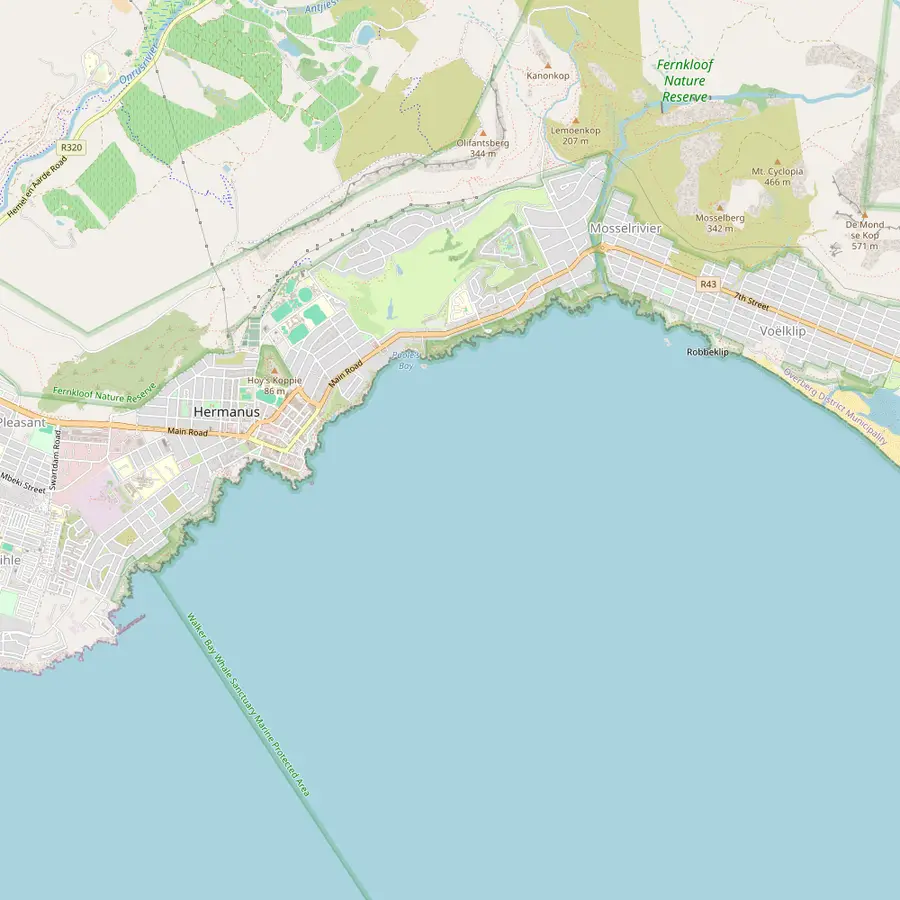 1New Harbour3Gearing's Point5Sievers Point6Kwaaiwater7Grotto Beach
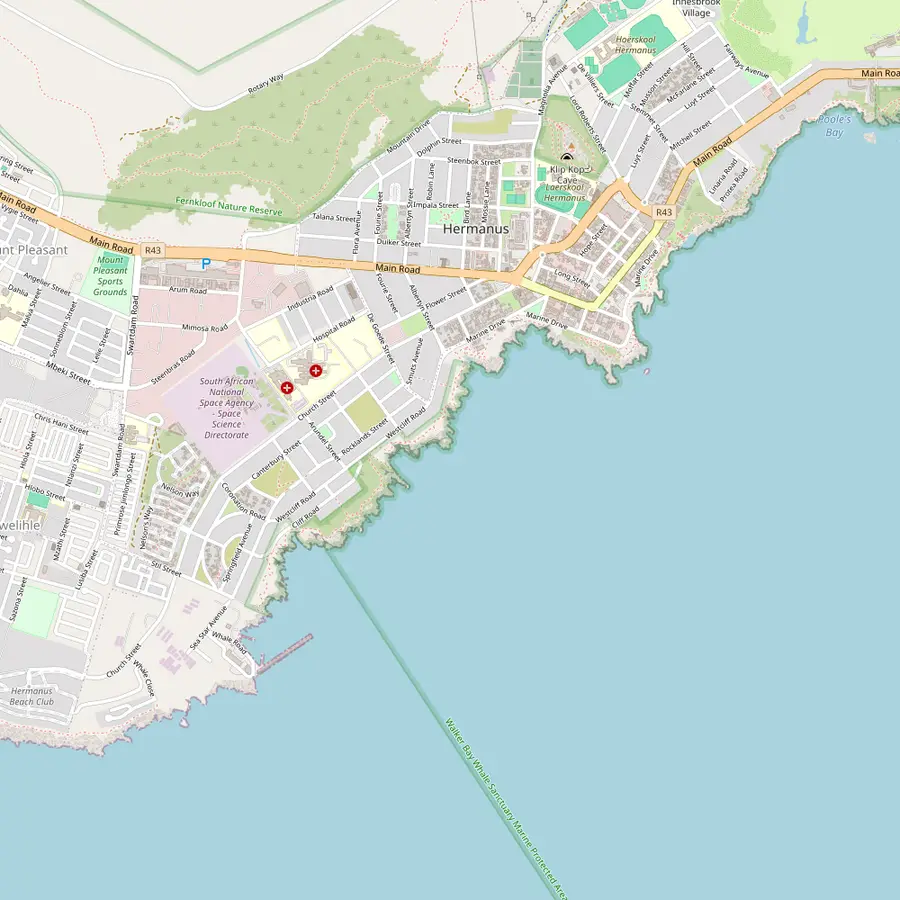 1New Harbour2Dreunkrans3Gearing's Point4Old Harbour
The western end of the Cliff Path and the harbour the whale watching boats leave from.18
In Google Maps ↗A popular lookout about 100 metres along the path from Fick's Pool towards the New Harbour.6
In Google Maps ↗Above the Old Harbour, with an open view across the sea.3
In Google Maps ↗Viewing terraces over Walker Bay, with boards that explain the whales.7
In Google Maps ↗One of the most popular spots in town and the closest to where the whales play.4
In Google Maps ↗A lookout you can reach by car.4
In Google Maps ↗The eastern end of the path; the rocks above the sea here and at Voëlklip suit whale spotting.19
In Google Maps ↗Checklist
Cost check
Choose an option and the number of people.
Total from$73
per head from $37
Check availabilityfree cancellationFrom-prices as GetYourGuide lists them, converted at the ECB rate. The booking page shows the exact amount.
Video
Until you tap play, the video stays unloaded.
Land-based whale watching in Hermanus needs little planning, but a few habits help. Go in the morning when the wind is often lighter and the water is calmer, and watch for the blow: a puff of mist above the surface is usually the first sign. Once you have seen one, keep your eyes on that spot, because the whale will surface again nearby.
Binoculars make a big difference on the cliffs. They let you see the pale patches on a southern right's head, the shape of a tail or a calf beside its mother. A phone camera works for close whales, but a longer lens or a pair of binoculars turns a distant splash into a real sighting you will remember.
Listen too. Hermanus has a whale crier who sounds a horn to alert people to whales in season, according to South African Tourism.10 Local people and other visitors are also quick to point out a whale. If you see a small crowd gathering at the rail, walk over and ask: most watchers are happy to share what they have found.
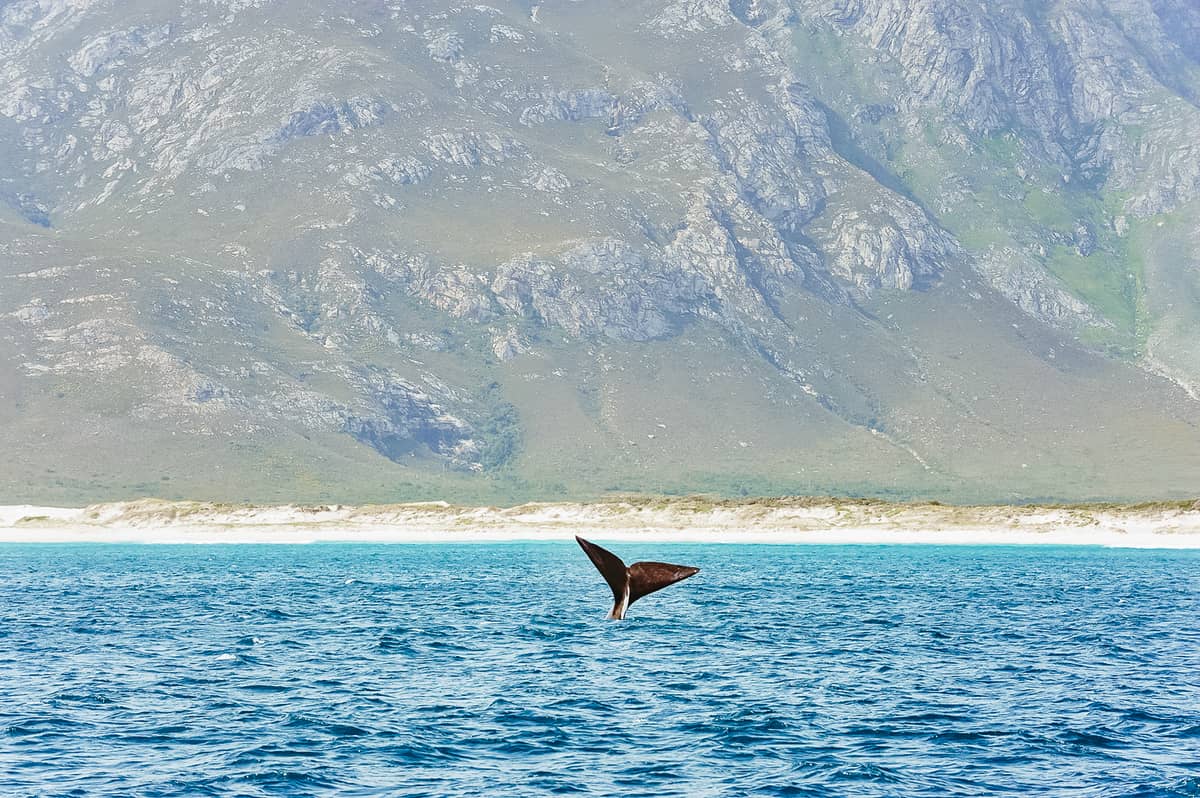
The Cliff Path is open all year, but the whales are seasonal. The local tourism site gives the whale season as June to November, with the best sightings between August and October.5 In those months the cliffs are at their most rewarding, and in the peak weeks you can see several whales from a single lookout.
Calves arrive in August and September, and October is when the population peaks as the males arrive.11 Mothers with young calves stay in the shallow, sheltered water, which brings them closest to the rocks. If seeing whales from the shore is your main goal, these are the months to aim for.
Time of day matters less than weather. A calm morning with low wind and good light makes blows and splashes easy to see, while a strong wind turns the sea white and hides the whales. If the wind is up, try a more sheltered lookout, or come back later when it drops.
If you have half a day, walking a long section of the path is one of the best things to do in Hermanus. The full route runs about 12 km between the New Harbour and Grotto Beach.1 You do not have to walk it all: many people start in the centre and walk east to Sievers Point or Kwaaiwater, then return the same way or take a taxi back.
The path is mostly easy, with some steps and uneven ground near the rocks. Wear sensible shoes, bring water and sun protection, and plan for wind on the headlands. In winter, showers can pass quickly, so a light rain jacket is worth carrying even on a bright day.
For background as you walk, a guided history walk along the cliffs is also offered, starting from $37 and lasting 2 hours. It is a good choice if you want to hear about the town and its whaling past while you watch the bay.
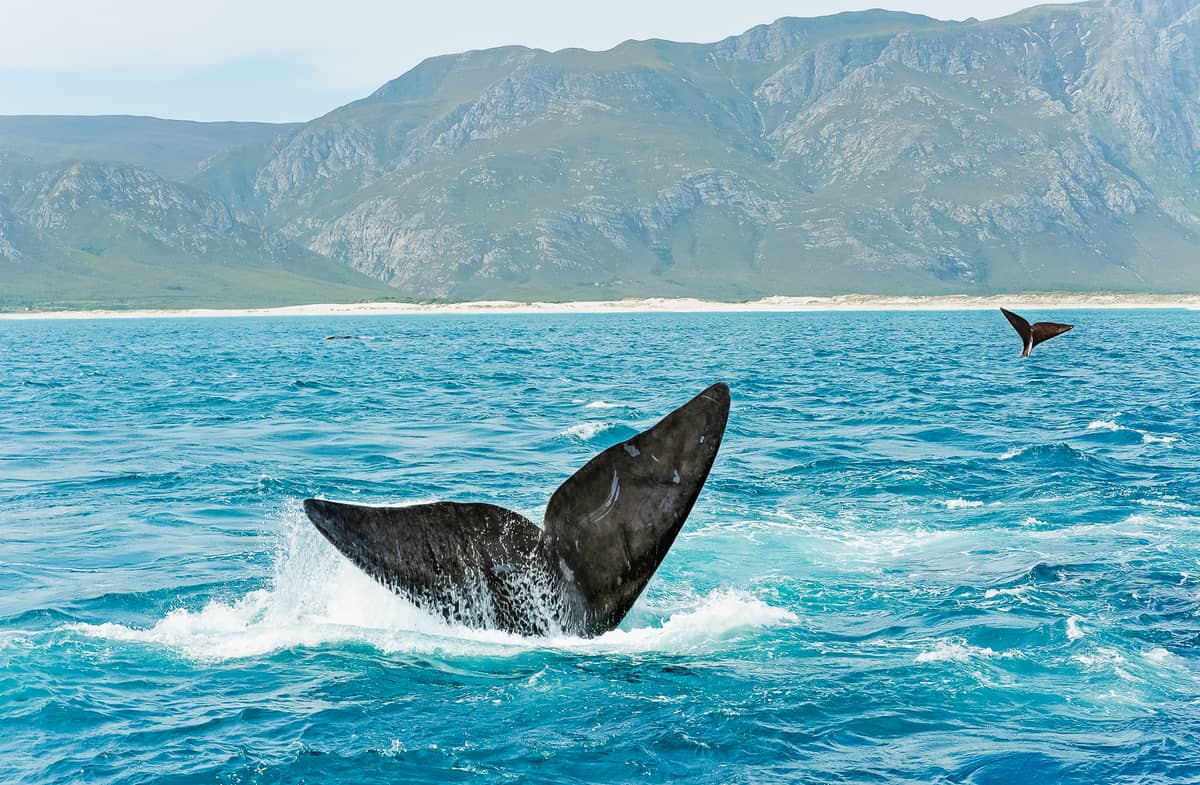
The cliffs and the boat give you two different experiences. From land, you watch whales in their own time and often very close to the shore. From a boat, you reach whales further out, see them at eye level and hear their blows up close. Neither is better in every way, and many visitors do both.
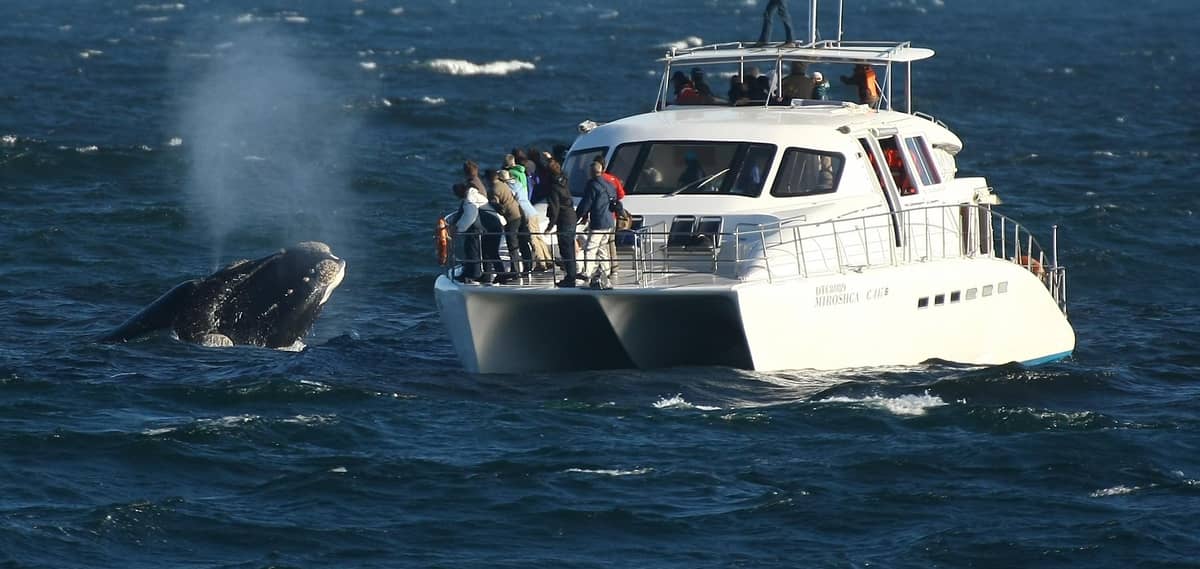
The rules on the water are strict. South African law requires everyone to keep 300 meters away from any whale unless they hold a permit for a closer approach.12 Licensed operators work with such permits. This site's tour leaves from the New Harbour on a purpose-built catamaran with a whale specialist guide and lasts 2 hours.
A good plan is to spend your first morning on the cliffs, learn what the whales look like, and then book a boat for a calm day. You will understand much more of what you see on the water, and you will have the cliffs to come back to whenever you have a free hour in town.
Book your trip
Book the catamaran now, settle up later, and stay free to cancel until the eve of sailing.
About 12 km. It runs from the New Harbour along the coast to Grotto Beach.1
Yes, often very close. At certain points whales come as close as five meters from shore.2
Gearing's Point. It overlooks the Old Harbour and gives an uninterrupted view of the ocean.3
Kwaaiwater. The Kwaaiwater lookout point is accessible by vehicle.4
Sievers Point is a favourite. Hermanus.co.za calls it the spot closest to where the whales play.4
Yes, at the Old Harbour. Its viewing terraces have boards with basic information about the whales.7
August to October. Those months bring the best sightings in a season that runs from June to November.5
Sources
Keep reading