 Quiet
QuietLanguage
EnglishCurrency
US dollar · $GetYourGuide converts to the currency you select here.
Guide · Season
Whale watching season in Hermanus, month by month
The southern right whales come back to Walker Bay every winter. Here is when they arrive, when the bay is fullest, what the weather does and how to choose your month.
Check availabilityfrom $96 · free cancellation
Editorial team, whale-watching-hermanus.comUpdated October 5, 2026about 7 min to read7 sources
Quick answer
When the whales come to Walker Bay
The whale watching season in Hermanus is a winter and spring affair. The local tourism site gives it as June to November, with the best sightings between August and October.1 Outside those months the bay is still beautiful, but you would be looking at empty water where, a few months earlier, mothers and calves rolled in the swell. If seeing whales is the reason for your trip, plan it inside that window and you start with the odds on your side.
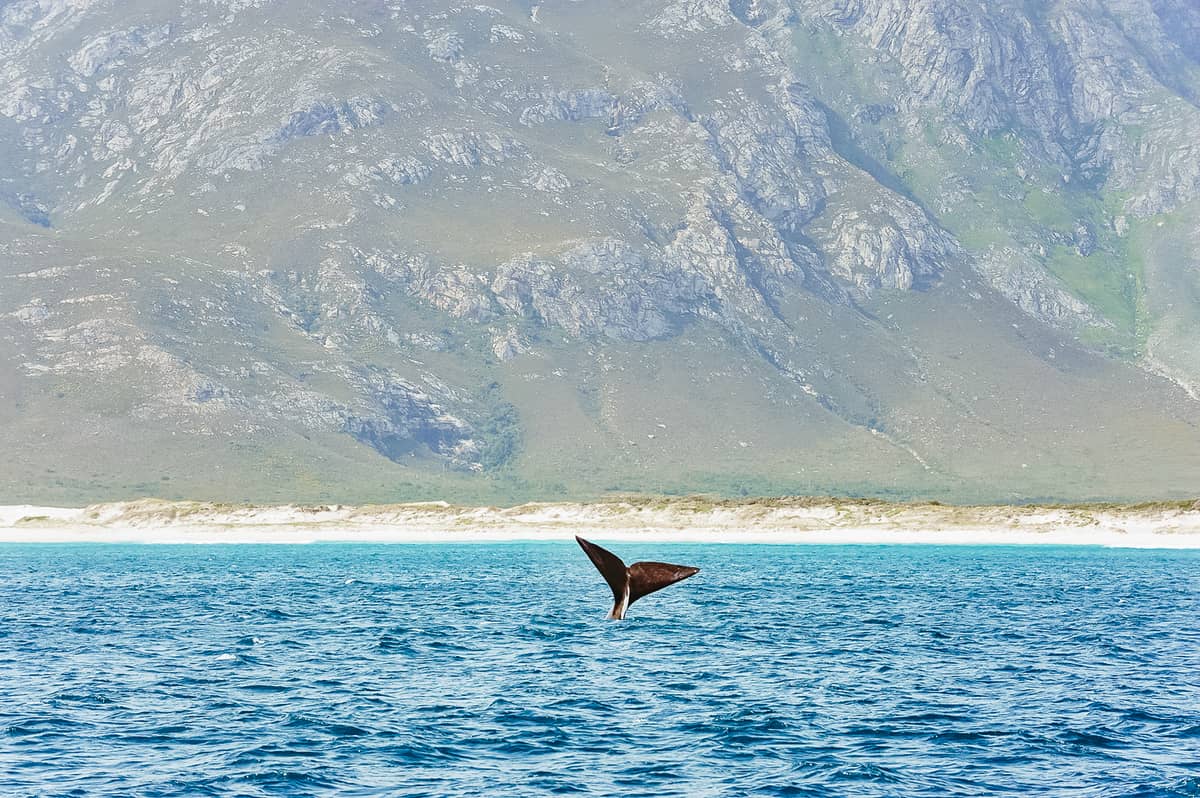
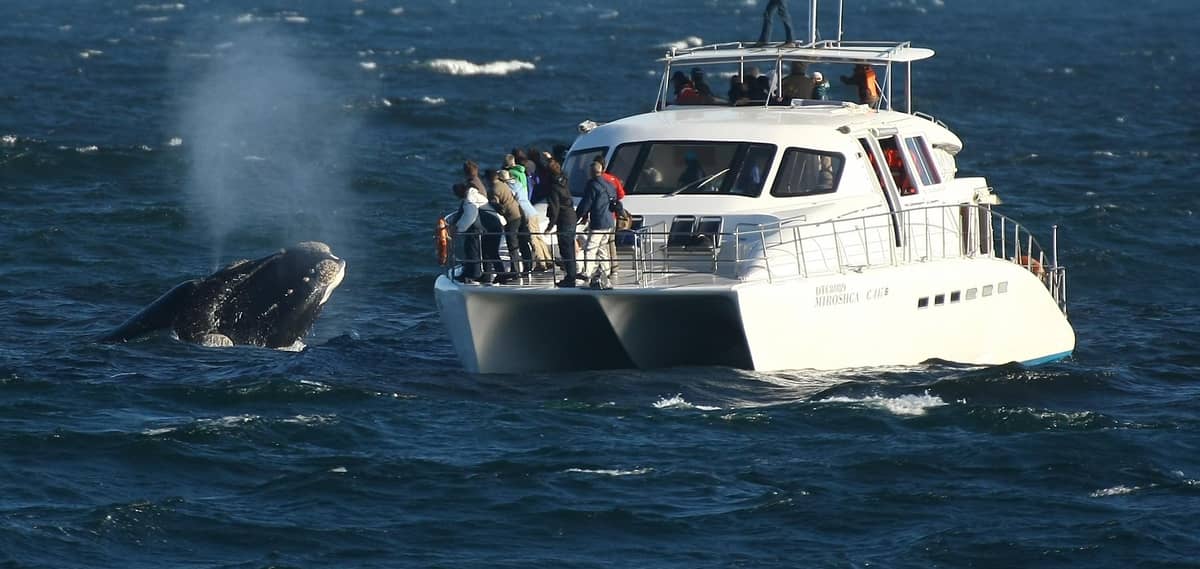
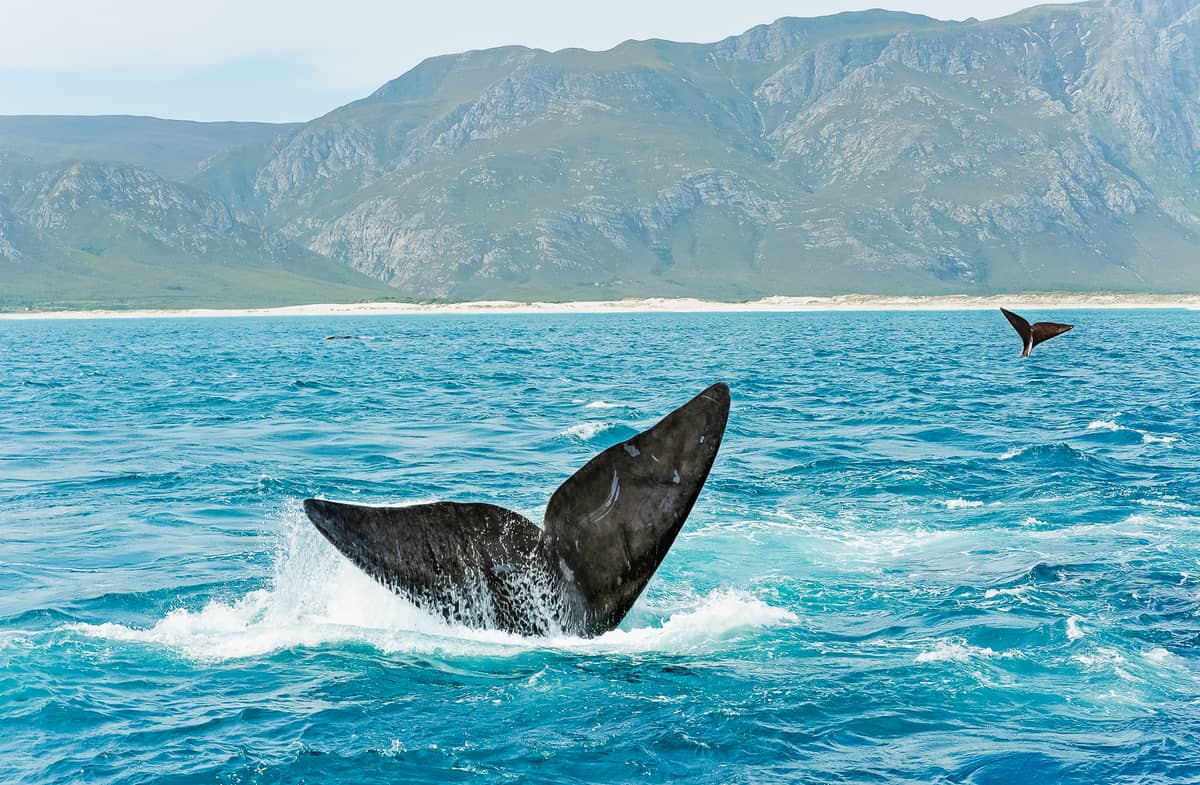
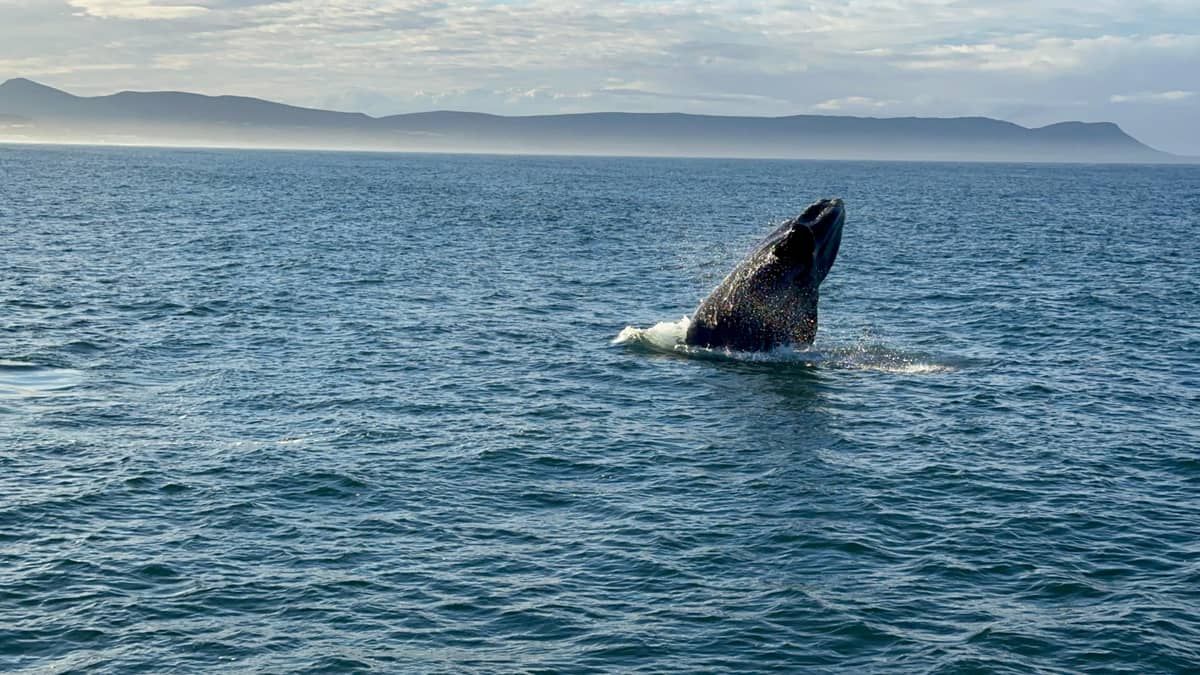
The whales that define the season are southern right whales. They travel up from the Antarctic around June to calve and mate in the sheltered water off the town.2 That is why Hermanus feels so different from places where whales simply pass by on migration: here many animals stay for weeks, resting, nursing and socialising close to the shore, which gives both boat trips and walkers on the cliffs time to watch.
Each year is a little different. The number of whales in the bay rises and falls with the animals' own rhythm, the food far to the south and the state of the population. Treat the months below as a strong guide rather than a timetable, and keep a day or two of flexibility in your plans if you can. A rough morning on the water can turn into a glassy afternoon, and a quiet week can be followed by a busy one.
The season
A year of southern right whales in Walker Bay
-
June
First arrivals
Southern rights come up from the Antarctic to calve and mate.2
-
July
A varying start
Whale numbers in July and August differ from year to year.3
-
August
Calving begins
Calving takes place in August and September.2
-
September
Mothers and calves
South African Tourism calls August and September the peak.4
-
October
The busiest bay
Males arrive to mate and the population peaks.2
-
November
Late season
Whales are still almost guaranteed this month.3
June and July: the first arrivals
The first southern rights reach the coast around June.2 Early in the season there are fewer whales in the bay, and the official guide is honest that numbers in July and August vary from year to year.3 Some years the bay fills quickly; in others you scan the water for a while before the first blow appears. That is part of the charm of early winter, and it rewards patience more than a fixed plan.
Winter on the Overberg coast is also the wettest part of the year. At the Cape Agulhas weather station, July averages 71 mm of rain over 7 wet days, with daytime highs of about 17.8 °C.5 Bring a waterproof layer and expect days that change quickly from bright sun to squalls and back again. Clear spells after a front can be the best moments of all, with calm water and sharp light over the mountains.
If June or July is your only window, it is still worth going out. A boat can cover far more of the bay than you can see from the shore, and the first whales of the season are often curious and relaxed. Just keep your expectations open, enjoy the quieter town and the empty viewpoints, and treat any whale as a bonus rather than a promise.
Weather
Daylight, warmth and rain through the whale season
Hours without sunDays with precipitationSeason
Month by month
Whale season and weather on the Overberg coast
| Month | Sun (h) | No sun (h) | High / low | Wet days | Whale season |
|---|---|---|---|---|---|
| Jan | 14.1 | 9.9 | 25 / 18 °C | 2 | no |
| Feb | 13.2 | 10.8 | 25 / 19 °C | 2 | no |
| Mar | 12.3 | 11.7 | 23 / 17 °C | 2 | no |
| Apr | 11.1 | 12.9 | 21 / 15 °C | 5 | no |
| May | 10.2 | 13.8 | 20 / 14 °C | 5 | no |
| Jun | 9.7 | 14.3 | 18 / 12 °C | 6 | yes, from June |
| Jul | 9.9 | 14.1 | 18 / 11 °C | 7 | yes |
| Aug | 10.7 | 13.3 | 18 / 11 °C | 6 | yes, best months |
| Sep | 11.8 | 12.2 | 19 / 12 °C | 5 | yes, best months |
| Oct | 12.9 | 11.1 | 20 / 14 °C | 3 | yes, best months |
| Nov | 13.8 | 10.2 | 22 / 15 °C | 3 | yes, until November |
| Dec | 14.3 | 9.7 | 24 / 18 °C | 2 | no |
Sun hours at mid-month, temperatures as average daily highs and lows, wet days from 2.5 mm. NOAA normals 1991 to 2020.5 Season according to Hermanus.co.za.1
Three ways to time it
Early, peak or late season
Quiet Best odds
Peak season
August to October
- Whales
- Calves and groups
- Weather
- Settling down
- Crowds
- Busiest weeks
 Warm and calm
Decision helper
Which month suits your trip?
Tap what matters most to you
August or September
Calving takes place in August and September.2
October
The population peaks when the males arrive.2
November
Highs near 21.7 °C and only 3 wet days on average.5
Early October
In 2026 it runs from 2 to 4 October.6
Go, but stay flexible
Numbers in July and August vary from year to year.3
Southern Right Whales migrate from the Antarctic around June to calve and mate. Calving takes place in August and September and the males arrive for mating in October when the whale population peaks.
August and September: calves in the bay
August and September are the months many people picture when they think of Hermanus. Calving takes place in August and September, so this is when you have the best chance of seeing a mother with a newborn close to the surface.2 South African Tourism calls August and September the peak, saying most pregnant mothers have arrived by then.4 A calf breaching beside its mother is one of the great sights of the coast.
The weather begins to soften too. September at the Cape Agulhas station averages 38 mm of rain on 5 wet days and highs near 18.7 °C, drier than midwinter.5 Mornings can still be cold on the water, and the wind can pick up later in the day, but there are more long, settled spells. These are good months for combining a boat trip with a walk along the cliffs on the same day.
Mothers with young calves tend to stay in the shallow, sheltered parts of the bay, which also makes them easier to see from land. If you are travelling with children or with someone who does not like boats, this is the time when the shore gives you the most. Bring binoculars for the cliffs and plenty of patience, and let the whales come to you.
Checklist
Packing for the whale season
01
Winter months
- A waterproof jacket for passing showers
- Warm layers for the boat and the cliffs
- A hat and gloves for early starts
02
Spring months
- Sunscreen and sunglasses for the water
- A windproof layer for the afternoon breeze
- A camera with a spare battery
03
Any month
- A spare day in case the boat cannot sail
- Binoculars for the Cliff Path
- Seasickness tablets if you need them
Video
Why Hermanus Is South Africa's Whale Watching Capital
Until you tap play, the video stays unloaded.
October: the busiest month
October is when the bay is at its fullest. Hermanus.co.za says the males arrive for mating in October, when the whale population peaks.2 Groups of whales can be seen rolling and jostling together, flippers and tails in the air, and the sound of blows carries across the water on calm days. It is a lively, noisy and very photogenic time on Walker Bay.
The town celebrates with the Hermanus Whale Festival, which in 2026 runs from 2 to 4 October.6 The festival brings crowds, stalls and events, and it fills accommodation quickly. If you want October without the busiest weekend, aim for the weeks either side, book your boat trip early and arrive at the viewpoints in the morning before the crowds.
Weather in October is generally kinder. The Cape Agulhas averages show 3 wet days and about 35 mm of rain, with highs around 20.2 °C.5 That makes it a comfortable month on the water, although the sea can still be choppy when the wind rises. A light jacket, sun protection and something warm for the boat cover most days.
November: late season, still strong
November is the end of the season, but not a weak month. The official guide describes whales as almost guaranteed in September, October and November.3 Whale watching in Hermanus in November has a lot going for it: the weather is warm, the town is calmer after the festival, and there are still plenty of whales in the bay before they head south again.
The days are long and dry. November at Cape Agulhas averages highs around 21.7 °C, 26 mm of rain and only 3 wet days.5 Long light means early and late trips, and more time on the Cliff Path with good visibility. It is also a pleasant month to combine whale watching with wine estates, beaches and the coastal drive.
Late-season whales can be very active, and on a good day you may see several groups. As the month goes on, numbers thin out, and by the end of November you are at the tail of the season. If you are flexible, aim for the first half of the month and you get the best of both worlds.
December to May: out of season
From December to May you are outside the southern right whale season described by the local tourism site.1 Summer brings beach weather instead: January at Cape Agulhas averages highs around 24.6 °C and just 17 mm of rain.5 It is a lovely time to visit Hermanus, just not the time to come for the whales that made it famous.
Boat trips still run outside the main season with other marine life. The operator of this site's tour says southern right and humpback whales visit seasonally, while Bryde's whales and dolphins can be seen through the year. Hermanus.co.za also notes that, depending on the time of the season, you may see migrating humpback whales or the resident Bryde's whales.7 Treat any whale outside the season as a lucky extra.
If your dates are fixed in summer, enjoy the coast for what it is, and check the operator's recent trip reports before booking. If you have any choice at all, move your visit into the winter and spring months. The difference between an empty bay and one full of southern rights is the whole reason Hermanus has its reputation.
How to choose your month
The best time for whale watching in Hermanus depends on what matters most to you. For calves, choose August or September; for the busiest bay and the festival atmosphere, choose October; for warmer weather, long days and fewer people, choose November. All of these months sit inside the best part of the season described by the town's tourism site.1
Then think about the weather and your own comfort on a boat. Midwinter brings more rain and rougher days, while spring settles down. If you get seasick easily, a calmer late-season month will make the trip more enjoyable, and you can always book on a day with a good forecast thanks to free cancellation on most trips.
Finally, give yourself a buffer. Boats do not sail in every weather, and the best days are often the ones after a front has passed. A few days in Hermanus let you pick the calmest morning for the boat, spend another on the cliffs, and still leave time for the town's harbour, cafés and coastal walks.
Book your trip
A southern right may be waiting in the bay.
Book the catamaran now, settle up later, and stay free to cancel until the eve of sailing.


You ask,we answer.
When is whale season in Hermanus?
From June to November. The local tourism site gives June to November as the season, with the best sightings from August to October.1
Which month is best for whales in Hermanus?
October is the busiest. Males arrive in October and the whale population peaks then, according to Hermanus.co.za.2
When can I see whale calves?
August and September. Calving takes place in August and September in Walker Bay.2
Is November too late to see whales?
No, it is still a strong month. Hermanus.co.za describes whales as almost guaranteed in September, October and November.3
Are there whales in Hermanus in July?
Yes, but numbers vary. The number of whales in July and August changes from year to year.3
When is the Hermanus Whale Festival?
In 2026, 2 to 4 October. The Overstrand Municipality announced the festival for these dates.6
Can I see whales in summer?
Southern rights are gone by then. Outside the season you may still meet resident Bryde's whales or dolphins, but treat them as a bonus.7
Sources
What this guide is based on
- 1Hermanus Whale WatchersWhale Watching with Hermanus Whale Watchers↩
- 2Hermanus.co.zaWhale Watching↩
- 3Hermanus.co.zaWhale Watching↩
- 4South African TourismCome greet the giants - southern right whale conservation↩
- 5↩
- 6Overstrand MunicipalityCelebrating the Giants of Walker Bay↩
- 7Hermanus Whale WatchersWhale Watching with Hermanus Whale Watchers↩
Keep reading